No 4 Mk1/2 markings
Printed From: Enfield-Rifles.com
Category: Enfields
Forum Name: Enfield Rifles
Forum Description: Anything that has to do with the great Enfield rifles!
URL: http://www.enfield-rifles.com/forum_posts.asp?TID=10651
Printed Date: March 26 2026 at 2:51pm
Software Version: Web Wiz Forums 12.07 - https://www.webwizforums.com
Topic: No 4 Mk1/2 markings
Posted By: Jmh06304257
Subject: No 4 Mk1/2 markings
Date Posted: June 14 2020 at 3:57pm
|
I recently came into possession of a No4 MK1/2 rifle that I have been trying to decipher the markings on it. Some of them I have worked out but some I can't find any reference to online. First marking is B 55 FTR which I have understood means it went through the FTR program like many of these rifles did post WWII. There does appear to be two serial numbers visible on the reciever, which does make sense as I have seen references to these rifles being given new serial numbers after FTR. The new looking serial number stamp is IOE059 on the receiver. The older looking serial number stamped is A3517. From online research I see that the standard format for these serial numbers is one or two letters followed by 5 numbers so I'm wondering why there is only 4. The only reference I saw to that is from Ian Skennerton noting that certain very early rifles produced at BSA Shirley only had 1 letter followed by 4 numbers not 5. Am I correct in stating that my rifle is one of these early production ones? The bolt has stamped on it H6709 and the magazine has stamped on it: FC 227732 A So these parts do not have the same markings. Is it possible they used parts off of a different rifle to bring this one back up to spec during the FTR process? There is one set of markings that I have found that I can't find any reference for. On the underside of the barrel in the same font style as the IOE159 serial number mentioned above is 101NC Melbourne FL ENF NO4 MK1 UK 303 I've got some experience deciphering the markings on British rifles as I also own a very nice Mark IV Martini Henry as well as a Snider and P53 Enfield, which I have all identified the markings on fairly easily but this one seems to have some markings that don't necessarily fit the established conventions and that I can't find any info online about either. Has anyone seen markings like this before? I have yet to find any maker's marks on it so the 4 number pattern serial number so far is the only clue I have as to where it was made. I was told that during the FTR process they would remove most of the original markings which does fit with what I see on this particular rifle. Not sure how much that was done with other rifles during FTR but it seems to have been done to this one. Some of the markings are quite worn and do not show up well in pictures otherwise I would have posted them. This rifle does require some cleaning so if any additional marks appear I may post again about them. It's my understanding this rifle originally came from the Ethiopian Armory purchase done by Royal Tiger Imports in Florida and imported for sale here in the US. I was told most of these rifles were sent to Ethiopia as military aid after the FTR process was done. Thanks for any information that can be shared with me about this rifle. Functionally it is fully mechanically operable and all parts are present. There is a small crack in the hand-guard but that is easily fixed. The person I got it from states it is still fire-able but I will not take any risks until I have it examined by a proper gunsmith.
|
Replies:
Posted By: Goosic
Date Posted: June 14 2020 at 7:07pm
|
Welcome from Phoenix Arizona. Would you be kind enough to post pictures of the left/flat side of the receiver and the left side buttsocket please? The A3517 would indicate an early BSA Shirley made rifle. The magazine is stamped with a Fazackerly serial number. Photos will help us decipher the numbers and any other Mark's it has...
|
Posted By: Jmh06304257
Date Posted: June 14 2020 at 8:53pm
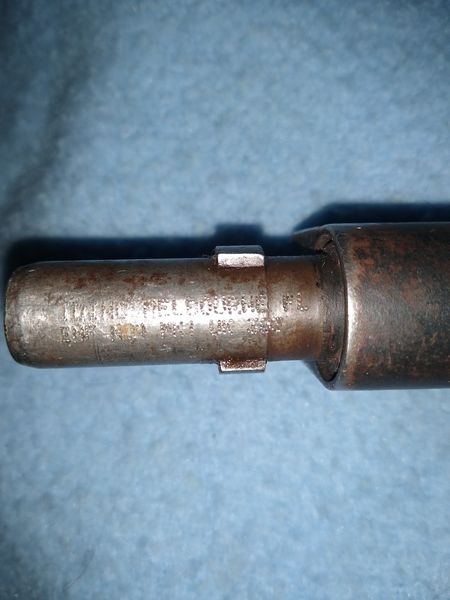 Thanks for the information. I will post the requested pictures however there are no markings visible on the buttsocket. Is this a normal occurrence? I thought it was somewhat strange that there are no markings there. Also, so if this is an early BSA Shirley rifle, do you happen to know around when it would have been manufactured and when this rifle was produced in relation to other No 4 Mk 1's. I know they made many millions of these for WWII use so I was wondering how far along in the production run this one would have been made. Thanks for any more information that can be provided. Thanks for the information. I will post the requested pictures however there are no markings visible on the buttsocket. Is this a normal occurrence? I thought it was somewhat strange that there are no markings there. Also, so if this is an early BSA Shirley rifle, do you happen to know around when it would have been manufactured and when this rifle was produced in relation to other No 4 Mk 1's. I know they made many millions of these for WWII use so I was wondering how far along in the production run this one would have been made. Thanks for any more information that can be provided.  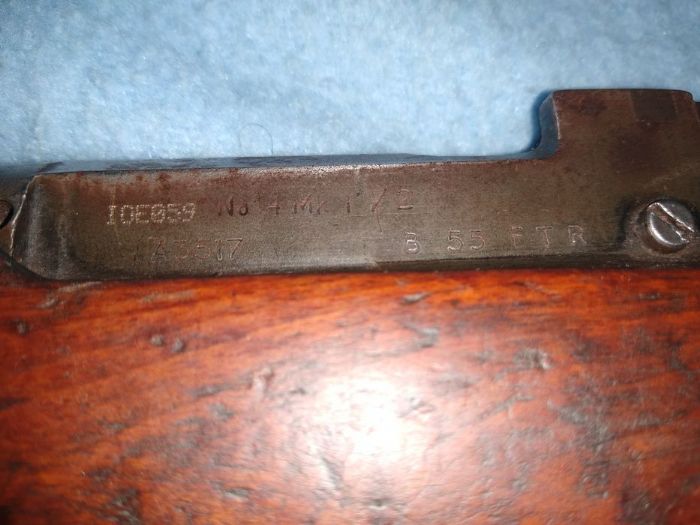 |
Posted By: A square 10
Date Posted: June 14 2020 at 9:29pm
|
welcome , yes ,i also think you have a BSA rifle but we need more info to confirm that BSA also did the FTRs and i think goosic said what i would given what you provided , some were renumbered in the process there were a number of war contracts to BSA some four digit some five digit but there were others as well and it depends on the full serial number to determine the exact origin ,
|
Posted By: Goosic
Date Posted: June 14 2020 at 9:49pm
| The A prefix followed by four digits would indicate early 1941. The B 55 FTR would also indicate that BSA did the FTR in 1955. The electro stencils on the barrel and receiver are from that importer/exporter. Never heard of them myself. |
Posted By: Zed
Date Posted: June 15 2020 at 4:08am
|
Agree with Goosic's comments above. Sounds like you have a non-matching bolt if it's not got the A3517 on it. That would be worth checking the fit for good contact at the lug's and headspace. If a bolt is replaced at FTR it would be numbered to the rifle's serial number. ------------- It's nice to be important, but it's more important to be nice! |
Posted By: Jmh06304257
Date Posted: June 15 2020 at 4:17am
| Thanks for the info everyone. So from a historical standpoint those electro stencil markings basically mean nothing then. For now that is all the markings that are visible but this rifle is in need of cleaning so if I uncover any more I will post them here. One question I do have is since the bolt and magazine have different numbers on them than then receiver, is it likely that they were replaced during the FTR process? I am guessing that any rifles that were beyond repair would have been stripped for usable parts and discarded and the parts put on rifles that could be repaired so perhaps that's where these parts came from then. I'm not sure if they did things like that but it would be reasonable to believe they did instead of using new built parts for efficiency and cost saving purposes. |
Posted By: Goosic
Date Posted: June 15 2020 at 9:10am
| The receiver is referred to as the master component. The bolt is mated to the master component during the assembly process and both are given the same serial number. The magazine is fitted to the master component as well. If,during a FTR, it was determined that either the bolt or magazine needed replacement the bolt assembly would be taken from existing new stockpiles and refitted to the master component and then numbered to match. The magazine would merely have the original number lined out and re-numbered to match after being refitted to the master component. The other small metal and wood bits on the other hand would have been used from whatever parts bins were on hand at the time of the FTR. Your rifle from the description you are providing would lead me to speculate that it was put together from parts that will function as they should but not properly fitted as they should have been. Is this rifle complete as it would have been from the factory or has it been sporterized in any way? Again,pictures showing the whole of the rifle from every angle can show us alot more then a worded description... |
Posted By: The Armourer
Date Posted: June 15 2020 at 9:20am
Basically what is being said, is that if the bolt number does not match the body (action) number it has not been assembled by a military armourer. When these rifles were imported into the US they were shipped with rifles in one crate and bolts in another - most of the importers would just 'stuff a bolt in a rife' without any consideration as to if it was the 'right bolt' Each bolt has to be FITTED to the rifle (fitted as in work needs doing) and not doing so can be dangerous as the recoil may not be correctly spread across the locking lugs. You can check yourself if it is bearing correctly on the locking lugs using 'engineers blue'. A search of the forum will provide you with the method. |
 Goosic wrote:
Posted By: Whitjr
Date Posted: June 15 2020 at 5:05pm
|
welcome from NC! Deciferimg the stampings is sometimes very difficult. I bought a No4 in january, that had the receiver, scrubbed of it’s original numbers, and a simple C-13 placed on it. The knuckle was also scrubbed, and there were several stampings that were -perhaps- inspectors marks, however the knowledge base here on the forum could only guess. Otherwise the numbers on the bolt, magazine, and under the rear handguard all matched. Have you looked at the barrel, specifically under the rear handguard? There should be some stampings there as well. Perhaps there is a clue to be discovered there. Again, more photos of the entire rifle from different views would assist with the folks that are ‘way more knowledgeable than I. ------------- |
Posted By: Goosic
Date Posted: June 15 2020 at 6:08pm
| The magazine has a Fazackerly serial number with an A suffix. That would indicate that the magazine is a non-interchageable component and parts specific to the rifle action it was originally mated to. |