Manfred Albrecht Freiherr von Richthofen
Printed From: Enfield-Rifles.com
Category: Off Topic
Forum Name: Military Talk
Forum Description: Feel free to talk about anything military related.
URL: http://www.enfield-rifles.com/forum_posts.asp?TID=733
Printed Date: March 26 2026 at 8:18pm
Software Version: Web Wiz Forums 12.07 - https://www.webwizforums.com
Topic: Manfred Albrecht Freiherr von Richthofen
Posted By: Cookie Monster
Subject: Manfred Albrecht Freiherr von Richthofen
Date Posted: January 21 2007 at 3:10am
|
Rittmeister Manfred Albrecht Freiherr von Richthofen
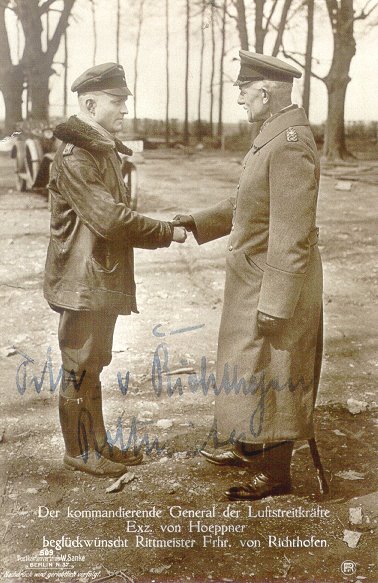
Manfred von Richthofen was born on May 2, 1892 in Breslau, Germany (now Wroclaw Poland). He died on April 21, 1918, age 25, in the skies over Vaux sur Somme, France. His people called him der rote Kampfflieger (The Red Battle-Flyer), The French called him le petit rouge, and he is known in the English speaking world as the Red Baron. In a time of wooden and fabric aircraft, when twenty air victories insured a pilot legendary status and the coveted Pour Le Mérite (the famous "Blue Max") , Richthofen had eighty victories, and is regarded to this day as the ace of aces.
Manfred von Richthofen was born the son of Major Albrecht von Richthofen, a Prussian nobleman, and his wife, Kunigunde. (The name Richthofen means "court of judgement" and was bestowed by the Holy Roman Emperor Leopold I.) Manfred was the eldest of three sons (the eldest child was his sister, Ilse). He was enrolled at age 11 at the military school at Wahlstatt, and then attended the Royal Military Academy at Lichterfelde. Manfred was a far better athlete than he was a scholar, and applied his horseback riding skills to become a cavalry officer. He was commissined in April, 1911 in the 1st Regiment of Uhlans Kaiser Alexander III. He was promoted to Leutnant in 1912. Unfortunately, twentieth century warfare had little use for mounted cavalry. The invention of the machine gun had led to the need for combat operations to be carried out from the relative safety of trenches dug into the countryside. When war broke out in August, 1914, Richthofen looked to the air service for a new challenge. He initially joined the Fliegertruppe (air service) in 1915 as an observer because the training course was shorter and would get him to combat faster. After meeting Oswald Boelcke, who would remain his hero and idol, Manfred was committed to becoming a pilot. After only 24 hours of flight training from his friend, Oberleutnant Georg Zeumer, he made his first solo flight on October 10, 1915. (He crashed his plane attempting to land.) 1915 - Richthofen takes to the airSeptember - In his second air combat (still as an observer), Richthofen exchanges fire with a French plane. The Allied plane dropped away and crashed, but Richthofen was not credited with the victory as the enemy plane crashed behind French lines (and could therefore not be confirmed). Later in his career, Richthofen would not be held to this restriction: he was taken at his word for his kills. 1916 - Richthofen becomes a pilot, first victoriesApr 24 - Richthofen shoots down his first plane as a pilot. The craft, a French Nieuport, crashed behind enemy lines, and again the victory was not officially credited to Richthofen. Sep 1 - At Oswald Boelcke's invitation, Richthofen reports for duty on the Western Front. He begins his career with Jagdstaffel 2 in an Albatros D.II biplane. Although it was the Fokker Dr.I triplane with which Richthofen is remembered, he spend the vast majority of his time flying biplanes like the Albatros D.II and D.III. Sep 17 - Richthofen scores his first confirmed air victory. October: After 40 victories, Oswald Boelcke is killed in a mid-air collision during combat. Some accounts blame Richthofen's enthusiasm for the collision which caused pilot Erwin Böhme's undercarriage to collide with Boelcke's upper wing. Others place the blame on Böhme, or call it simply an accident not attributable to anyone's mistake. Nov 23 -- Richthofen, with the help of a superior aircraft, makes British ace Major Lanoe Hawker his eleventh victim. 1917 - Richthofen's rise, fall, and returnJan 4 -- Richthofen scores his 16th air victory, making him the top living German ace. On January 12th, Richthofen receives the Orden Pour le Mérite (aka the "Blue Max"). He is given command of Jasta 11. Richthofen decides to paint parts of his aircraft red, in part to identify himself easily to his allies on the ground (whom he feared would otherwise shoot at him). It has been suggested that he chose red because it was the color of his old Uhlan cavalry regiment. This 
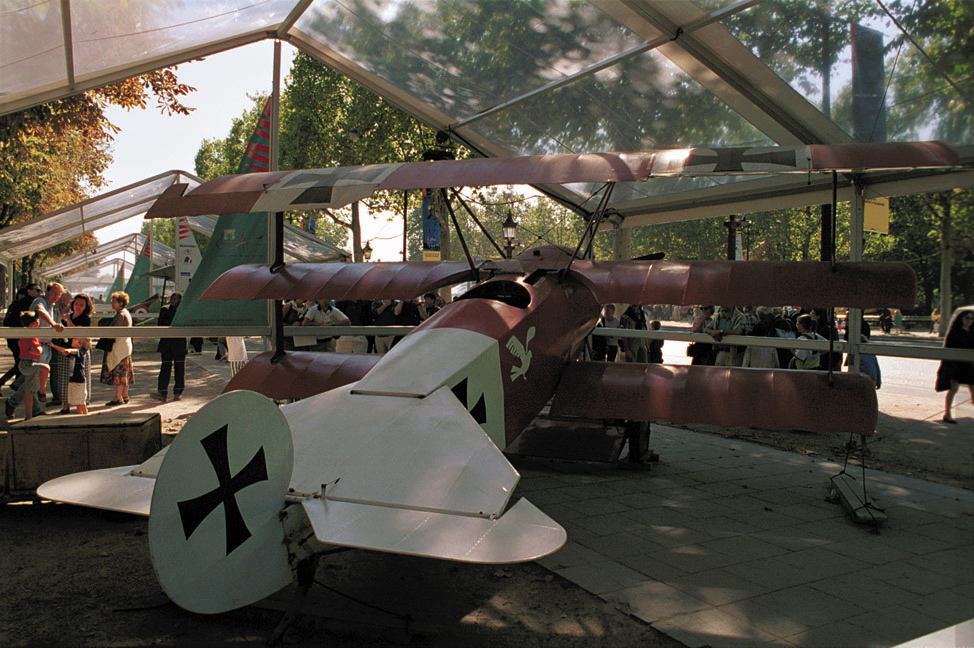
Albatros D.III begins a series of traditions: each plane in his squadron begins to display some red coloring to show solidarity. Later in the war, some British planes bore red noses, announcing their intention to hunt down the Red Baron. Jan 24 -- The lower wing of Richthofen's Albatros D.III breaks off in flight (a common problem for that type). Mar 9 -- Richthofen is shot down over Oppy, but was flying again the same day. Apr 7 -- Richthofen is promoted to Rittmeister (Cavalry Captain) Apr 8 -- The lower wing of the Albatros D.III flown by another member of Jasta III breaks off in flight. Richthofen writes an angry letter to Berlin, and is visited by aircraft designer Anthony Fokker, who literally goes to the trenches to observe his aircraft in action. The result of this visit (in which he was able to observe the British Sopwith Triplane) led to Fokker's development of the Dr.I triplane. Apr 29 -- Richthofen shoots down four planes in one day, a personal best. April, 1917 is known as "Bloody April". Britain lost 912 pilots and observers during the month, while Richthofen scored an incredible 21 victories during the same period. After his 41st victory, Richthofen was ordered on leave. Turning command over to his brother Lothar, Manfred left the front on May 1st and did not return until early June. He spent his vacation hunting in his home town, on propoganda tours, and meeting with Kaiser Wilhelm. Jun 24 -- Jagdgeschwader 1 (Fighter Wing 1) is formed, with Manfred von Richthofen in command. The wing would later be renamed "Jagdgeschwader Frieherr von Richthofen" in his honor. Fokker Dr.I Dreidecker
Service Dates: 1917 to 1918 (320 built) July: Richthofen is shot down by Capt. Douglas Cunnel and 2nd Lt. Albert Woodbridge. Though he lands safely, he has suffered a serious bullet wound to the head. Manfred would suffer from terrible headaches until the end of his life, but there were other ramifications. German command, recognizing the propaganda value to the enemy of Richthofen's loss, begins to pressure him to retire from air combat, going so far as to forbid him from flying unless absolutely necessary (a loophole Richthofen exploited at every opportunity). Richthofen began to spend more and more of his time in more administrative and public relations roles. Eventually he returned to the front full-time when Germany's leaders realized that no matter the risks, they could not afford not to let Richthofen do what he did better than anyone else. August: The first Fokker triplanes are delivered to Jagdgeschwader 1. September 1 -- Richthofen scores his 60th victory, his first in the Dr.I triplane. On September 6th, he took a leave of convalescence, and when he returned in the next month he went back to flying the Albatros D.V. 1918 - The death of Manfred von RichthofenApril: Richthofen achieves two victories flying Fokker Dr.1 triplane (number 425/17). Though he flew biplanes for nearly all of his career, and most of these were only partly painted red, it is the Dr.1 triplane, blood-red from cowl to tail, which is commonly associated with the Red Baron.  On April 21, Richthofen followed the Sopwith Camel of Wilfred May far into British territory. The end of the war was only months off by this time, and the Germain air command faced both ever-improving British airplanes and their own dwindling numbers. The thrill of the hunt was all but gone for Baron von Richthofen, as most of his peers had already been killed and his own wounds agonized him. Though the German air doctrine he himself wrote stated that "one should never obstinately stay with an opponent which, through bad shooting or skillful turning, he has been unable to shoot down while the battle lasts until it is far on the other side", he chased his British quarry far deeper into enemy territory and far lower to the ground than his own doctrine permitted. May later said that it was only his erratic, untrained piloting which saved him. Richthofen followed the erratic path of the novice pilot until a single bullet, shot from behind him, passed diagonally through his chest. The shot is commonly believed to have come from Australian gunners on the ground using a Vicker's .303 British, but might have also come from the guns of Canadian flier Arthur "Roy" Brown who was coming to May's aid. Manfred von Richthofen crashed into a field alongside the road from Corbie to Bray. His body was recovered by British forces, and he was buried with full military honors. Manfred's brother, Lothar (also a Pour le Mérite recipient) was himself recovering from being shot down when his older brother was killed in combat. He returned to Jagdgeschwader 1 and carried on the Richthofen tradition of fearlessness in combat in a blood-red fighter. Lothar was shot down again on August 13th, 1918, and forced into retirement with 40 kills. Manfred's eventual successor was Hermann Göring (who would later become the head of the Luftwaffe and a particularly infamous Nazi), who chose to paint his aircraft completely white, ending the reign of the blood-red German fighers. |
Replies:
Posted By: hoadie
Date Posted: January 21 2007 at 9:39am
|
Mr.May was also known as "WOP" May.He went on to become one of Canada's most famous bush pilots. He (if I rememeber correctly) also went on to help found now defunct WARDAIR airlines, with max Ward.(I flew a couple times on Wardair, & let me tell ya..they were the BEST in the air!!)
Hoadie ------------- Loose wimmen tightened here |
Posted By: Guests
Date Posted: January 21 2007 at 11:29am
|
I'll never forget my shock of learning how young Richthofen was ! I had always envisioned a much Older man ! Then again in reflection these days I think of how young I was & so many like me that became soldiers ! Dave |
Posted By: Rockycoyote
Date Posted: January 21 2007 at 12:00pm
|
He sure was young. One of his kin had a castle moved to Denver in the early part of the last century. Cool place. I was able to take a tour about 20 years ago. Now it's under private ownership once again. Funny thing I learned a while back, was an English chap nammed Kitridge saw Richthofen's spread and did'nt want to be bested so he built a castle three blocks away. It was takin down in the 50's if I recall corectly. Now it's a park. ------------- Type 99 Arisaka Steyr model 95 No5MK1 WASR-3 (.223 AK) Bushy HBAR Rem 700 6mm rem Walther P1 Mosin Nagant 91/30 |
Posted By: allan
Date Posted: January 21 2007 at 8:51pm
|
thanks for the info CM..extremely interesting.. ------------- 'SAVIOUR OF OUR SKIES BOYO!' |
Posted By: Cookie Monster
Date Posted: January 21 2007 at 8:58pm
Thanks Allan,
I enjoy military history.
CM
|
 allan wrote:
Posted By: Cookie Monster
Date Posted: January 21 2007 at 8:59pm
|
http://www.dhm.de/lemo/objekte/pict/ba940035/index.html"> |

Posted By: Cookie Monster
Date Posted: January 21 2007 at 9:03pm
|
Posted By: Cookie Monster
Date Posted: January 21 2007 at 9:04pm

|
Posted By: Cookie Monster
Date Posted: January 21 2007 at 9:05pm
http://www.speedace.info/medal.htm">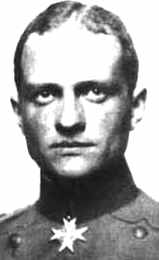
|
Posted By: Cookie Monster
Date Posted: January 21 2007 at 9:06pm
|
http://www.nationmaster.com/encyclopedia/Image:Lothar-and-Manfred-von-Richthofen.jpg - http://www.nationmaster.com/encyclopedia/Image:Lothar-and-Manfred-von-Richthofen.jpg">
 Lothar von Richthofen (right) with elder brother Manfred
|
Posted By: Cookie Monster
Date Posted: January 21 2007 at 9:07pm
|
|

Posted By: Cookie Monster
Date Posted: January 21 2007 at 9:10pm
|
|

Posted By: Cookie Monster
Date Posted: January 21 2007 at 9:12pm
|
Manfred's Brother was also a ace with 40 kills
CM
|
Posted By: Cookie Monster
Date Posted: January 21 2007 at 9:14pm

|
Posted By: Cookie Monster
Date Posted: January 21 2007 at 9:15pm
|
||||||||||||||||||||||||||||||||||||||||||||||||||||||||||||||||||||||||||||||||||||||||||||||||||||||||||||||||||||||||||||||||||||||||||||||||||||||||||||||||||||||||||||||||||||||||||||||||||||||||||||||||||||||||||||||||||||||||||||||||||||||||||||||||||||||||||||||||||||||||||||||||||||||||||||||||||||||||||||||||||||||||
Posted By: Cookie Monster
Date Posted: January 21 2007 at 9:17pm
 This was his home
|
Posted By: Cookie Monster
Date Posted: January 21 2007 at 9:20pm

|
Posted By: Cookie Monster
Date Posted: January 21 2007 at 9:21pm

|
Posted By: Cookie Monster
Date Posted: January 21 2007 at 9:24pm

The coveted Blue Max
|
Posted By: Cookie Monster
Date Posted: January 22 2007 at 11:34am

Father oad son
|
Posted By: Cookie Monster
Date Posted: January 22 2007 at 11:36am

|
Posted By: Cookie Monster
Date Posted: January 22 2007 at 11:37am

|
Posted By: Cookie Monster
Date Posted: January 22 2007 at 11:39am

|
Posted By: Cookie Monster
Date Posted: January 22 2007 at 11:42am

|
Posted By: Cookie Monster
Date Posted: January 22 2007 at 11:42am

|
Posted By: Cookie Monster
Date Posted: January 22 2007 at 11:43am

|
Posted By: Cookie Monster
Date Posted: January 22 2007 at 11:44am

|
Posted By: Cookie Monster
Date Posted: January 22 2007 at 11:46am

|
Posted By: Cookie Monster
Date Posted: January 22 2007 at 11:50am

|
Posted By: Cookie Monster
Date Posted: January 22 2007 at 11:55am

|
Posted By: Cookie Monster
Date Posted: January 22 2007 at 11:56am

|
Posted By: Cookie Monster
Date Posted: January 22 2007 at 11:57am

|
Posted By: Cookie Monster
Date Posted: January 25 2007 at 2:14am

The last known "portrait" of Manfred von Richthofen, probably taken prior to take off on April 21, 1918
|
Posted By: Cookie Monster
Date Posted: January 25 2007 at 2:22am

|
Posted By: Cookie Monster
Date Posted: January 25 2007 at 2:24am

|
Posted By: Cookie Monster
Date Posted: January 25 2007 at 2:25am

|
Posted By: Cookie Monster
Date Posted: January 25 2007 at 2:27am

|
Posted By: Cookie Monster
Date Posted: January 25 2007 at 2:28am
|
Posted By: Cookie Monster
Date Posted: January 25 2007 at 2:29am

|
Posted By: Cookie Monster
Date Posted: January 25 2007 at 2:33am

Albatros D.II Manfred's first plane. Most of his victorys were in this aircraft
|
Posted By: Cookie Monster
Date Posted: January 25 2007 at 2:34am

|
Posted By: Cookie Monster
Date Posted: January 25 2007 at 2:34am

|
Posted By: Cookie Monster
Date Posted: January 25 2007 at 2:35am
|
Posted By: Cookie Monster
Date Posted: January 25 2007 at 12:28pm
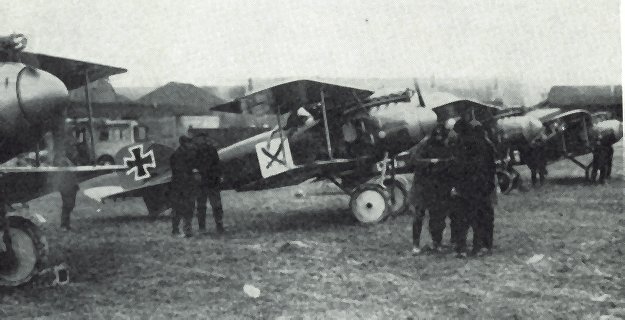
 The Fokker D.VII is widely regarded as the best German aircraft of the war. Its development was championed by Manfred von Richthofen. In January 1918, Richthofen tested the D.VII in the trials at Adlershof but never had an opportunity to fly it in combat. He was killed just days before it entered service. When introduced, the D.VII was not without problems. On occasion its wing ribs would fracture in a dive or high temperatures would cause the gas tank to explode. Even so, the D.VII proved to be durable and easy to fly. As noted by one authority, it had "an apparant ability to to make a good pilot out of mediocre material." When equipped with the BMW engine, the D.VII could outclimb any Allied opponent it encountered in combat. Highly maneuverable at all speeds and altitudes, it proved to be more than a match for any of the British or French fighter planes of 1918. |
Posted By: Cookie Monster
Date Posted: January 25 2007 at 12:28pm
|
Fokker D.VII Manufacturer: Fokker Flugzeug-Werke GmbH Type: Fighter First Introduced: End of April, 1918 Number Built: 840 Engines: Mercedes D-III 6 cylinder inline, 160 hp BMW IIIa inline, 185 hp Wing Span:29 ft 3.5 in Length:22 ft 11.5 in Height:9 ft 2.5 in Empty Weight:1,540 lb Gross Weight:1,939 lb Speed:118 mph - Mercedes 124 mph - BMW Ceiling: 18,000 ft Mercedes 21,000 ft BMW Endurance: 1.5 hours Crew: 1 Armament: 2 Spandau 7.92 mm machine guns |
Posted By: Cookie Monster
Date Posted: January 25 2007 at 12:30pm
 The Fokker DR.I triplane was built after the Sopwith Triplane. While not as fast as contemporary biplanes, the Dreidecker could easily outclimb any opponent. Small, lightweight and highly maneuverable, it offered good upward visibility and lacked the traditional bracing wires that could be shot away during combat. This combination of features made it an outstanding plane in a dogfight. When the DR.I first entered service, antagonists scoffed until pilots like Werner Voss showed what it could do in a fight. Flying a prototype, Voss shot down 10 British aircraft in 6 days of aerial combat during September 1917. Unfortunately, the DR.I was not without problems. By the end of October 1917, it was temporarily withdrawn from service when several pilots, including Heinrich Gontermann, were killed as a result of wing failures. Despite structural improvements, the Fokker triplane's reputation among German airmen never recovered. |
Posted By: Cookie Monster
Date Posted: January 25 2007 at 12:31pm
|
Fokker Dr.I Manufacturer: Fokker Flugzeug-Werke GmbH Type: Fighter First Introduced: August 1917 Number Built: 320 Engine: Oberursel UR.II, 9 cylinder reciprocating Wing Span: 23 ft 7 3/8 in 7.19 m Length: 18 ft 11 1/8 in 5.77 m Height: 9 ft 8 in Empty Weight: 893 lb Gross Weight: 1,289.2 lb 586 kg Speed: 103 mph 165 kmh 13120 ft 4000 m Ceiling: 20,013 ft 6100 m Endurance: 1.5 hours Crew: 1 Armament: 2 Spandau 7.92 mm machine guns |
Posted By: Cookie Monster
Date Posted: January 25 2007 at 12:45pm
|
Posted By: Cookie Monster
Date Posted: January 25 2007 at 10:22pm
| The Fokker D.VII was a late World War I fighter aircraftdesigned by Reinhold Platz at the Fokker company. When introduced into combat in 1918, it quickly proved to be superior to existing Allied fighters, leading to a second Fokker Scourge. So infamous was the airplane, that it was the only weapon specifically mentioned by name by the Allies in the armistice agreements at the end of the war |
Posted By: Cookie Monster
Date Posted: January 25 2007 at 10:30pm
|
Fokker's chief designer Reinhold Platz had been working on a series of experimental planes, the V-series, since 1916. These planes were characterized by the use of thick-sectioned, cantilever wings (based on his German government-required collaboration with Hugo Junkers, who originated the idea in 1915 with his own firm and with the earliest all-metal aircraft) instead of thin wings with external wire bracing. This resulted in a stronger wing with greater lift and more docile stalling behavior. Late in 1917, Fokker built the V.11 experimental biplane, fitted with the standard Mercedes D.IIIa engine. In January 1918, a competition to select a new fighter was held at Adlershof. For the first time, frontline pilots would directly participate in the evaluation and selection of new fighters. Fokker sent in the V.11 along with several other prototypes. Manfred von Richthofen flew the V.11 and found it tricky, unpleasant, and directionally unstable in a dive. In response to these complaints, Fokker modified the V.11 by lengthening the fuselage and adding a fixed fin in front of the rudder. Upon flying the modified V.11, Richthofen praised it as the best aircraft of the Adlershof competition. It offered excellent performance from the outdated Mercedes engine, yet it was safe and easy to fly. Richthofen's recommendation virtually decided the competition, but he was not alone in recommending it. Fokker immediately received a provisional order for 400 V.11 aircraft. Fokker's factory was not up to the task of supplying the entire air force, so their rivals at Albatros and AEG were directed to build the D.VII under license, though AEG did not ultimately produce any aircraft. Fokker did not use production plans for their designs, instead building directly from jigs, and so they simply sent a completed D.VII to Albatros to copy. Albatros paid Fokker a 5 percent royalty for every D.VII built under license. Albatros Flugzeugwerke and its subsidiary, Ostdeutsche Albatros Werke (OAW), built the D.VII at factories in Johannisthal and Schneidemühl, respectively. The former carried the designation Fokker D.VII (Alb), while those constructed at Schneidemühl were designated Fokker D.VII (OAW). Some parts were not interchangeable between aircraft produced at different factories, even between Albatros and OAW. Albatros soon surpassed Fokker in the quantity and quality of aircraft produced. The state of German industry had already started to deteriorate at this point, and under 2,000 of the planes were delivered from all three plants, with the most commonly quoted figure being 1,700. |
Posted By: Cookie Monster
Date Posted: January 31 2007 at 1:49pm
|
http://www.directart.co.uk/mall/dynamic3.php?ProdName=DHM1457&action=name"> |

Posted By: Cookie Monster
Date Posted: January 31 2007 at 1:55pm
This is a photo of the cockpit of a Fokker DR-1
 |
Posted By: Cookie Monster
Date Posted: January 31 2007 at 1:56pm

|
Posted By: Cookie Monster
Date Posted: January 31 2007 at 1:59pm

|
Posted By: Cookie Monster
Date Posted: January 31 2007 at 1:59pm

|
Posted By: Lithgow
Date Posted: January 31 2007 at 2:29pm
| I reckon those blokes had a lot of guts flying those planes. They dont look very substantial |
Posted By: Hatchetman
Date Posted: January 31 2007 at 3:40pm
|
Whats wrong with flying something made from canvas an balsa wood... with big machineguns on the front? I have even flown something made of canvas and balsa wood WITHOUT its own engine before. Gliding was a huge laugh. Woah that portrate of the red barron is awesome. |
Posted By: Cookie Monster
Date Posted: January 31 2007 at 4:05pm
| Yes hatchetman it is an excellent work of art. Manfred Albrecht Freiherr von Richthofen was a honorable pilot |