MK 4
Printed From: Enfield-Rifles.com
Category: Enfields
Forum Name: Enfield Rifles
Forum Description: Anything that has to do with the great Enfield rifles!
URL: http://www.enfield-rifles.com/forum_posts.asp?TID=9668
Printed Date: March 26 2026 at 4:31pm
Software Version: Web Wiz Forums 12.07 - https://www.webwizforums.com
Topic: MK 4
Posted By: horseman527
Subject: MK 4
Date Posted: April 03 2019 at 1:25pm
|
Hi - I have a Mk 4 on the end of the barrel it is stamped 18.5 tons per ? What does that mean? I believe the rear sights are original but my rifle came with another set - who makes this rear sight and is it better than the original? Any help would be appreciated Thanks! 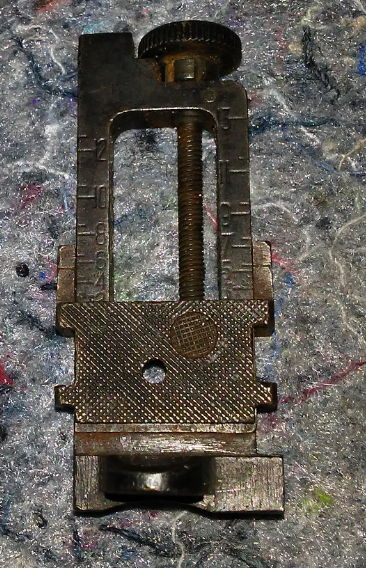 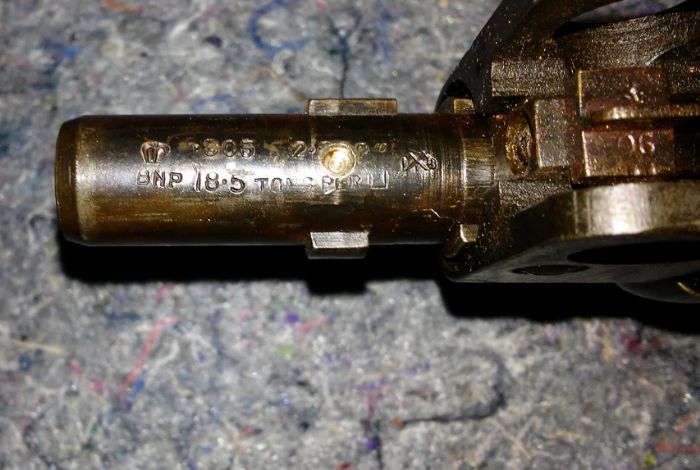 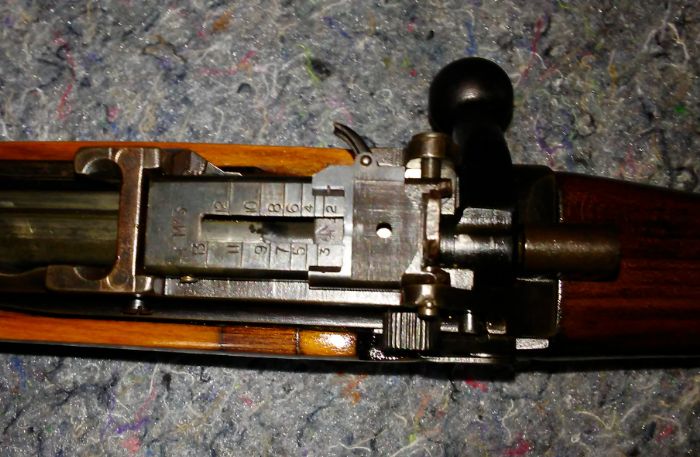
|
Replies:
Posted By: Zed
Date Posted: April 03 2019 at 11:30pm
|
I believe your rifle is a No4MkI*. The sight with screw adjustment are much better than the sprung slide of the type currently fitted. I have recently swapped the same for my latest No4 rifle. The "Singer" type sight with it's screw adjustment allows adjustments of about 1MOA per click. The slide type has less accurate adjustment and is not easy for target shooting; as I found out recently. Seemed to be around 3 or 4 MOA between each point of adjustment. ------------- It's nice to be important, but it's more important to be nice! |
Posted By: SteyrAug
Date Posted: April 04 2019 at 1:49am
|
http://www.allaboutenfields.co.nz/wp-content/gallery/markings-and-disks-1/broad-arrow-variation.jpg" rel="nofollow - |
Posted By: Stanforth
Date Posted: April 04 2019 at 4:03am
|
I have also fitted the Singer type sight with the screw adjustment to my Savage No.4 MK1* and it is far better than the spring sided one originally fitted. I can now reliably get 1.5 MOA groups. ------------- Life.. a sexually transmitted condition that is invariably fatal. |
Posted By: britrifles
Date Posted: April 04 2019 at 6:12am
|
Agree with all above, the Mk 1 micrometer sight is much better and gives 1 MOA (one inch at 100 yards) elevation adjustments. And if you are somewhat far sighted like I am, a reduced size aperture does wonders to help focus on the front sight. Reducing the aperture size may not be allowed on some service rifle match rules. I've never quite figured out the math on the pressure rating of 18.5 tons per sq in. The British Ton is 2240 lbs, so that's 41,440 psi. I thought the Mk VII ammunition was rated at 19.5 tons per sq in (46,680 psi). SAAMI specs show 49,000 psi for the .303 British. Is this because of the different methods of measuring pressures (piezo vs copper crusher, etc.)? What am I doing wrong here? |
Posted By: Pukka Bundook
Date Posted: April 04 2019 at 6:25am
|
Like others have said, the Mk 1 rear sight, (Singer type) is much better than the Mk 3 type fitted at present. It seems your adjustment lever is a bit either bent on the latter sight, or your spring may be wonky. (Lever sticks out more than usual) The British proof was done before the rifles were sold to the public. Best, R.
|
Posted By: Shamu
Date Posted: April 04 2019 at 9:22am
|
Bit more info & a minor correction. From the picture of the stamped sight it seems to be missing a spacer (little cylinder) on the right hand end of the pivot. If you flip it up does it slide from side to side? If so definitely replace it with the micrometer screw version. The spacer was made to allow for the reduced width of the stamped sights & without it they can flop all over the place, but its not needed for the cast singer type. Swapping them is easy. Tap out the cross pin on the left hand end of the "screw" shaft that acts as a pivot. It ONLY comes out from the bottom up the pin is tapered. Push (don't try to unscrew the shaft is not threaded) the cross axis out to the right while pushing down a little on the sight body to release spring tension. When the shaft is removed the plunger & spring will pop the sight up. Remove it & drop the new one in to the same spot. Push down & slide the axis pin (its correct name) back in fully. NOW we use the slotted head to rotate the shaft till its hole lines up with the cuts in the frame & tap the little pin back in from the top. Sounds tricky but takes about 5 minutes. Re-zero for the new sight. The .303 2.222" BNP 18.5 tons per Sq Inch is the British Civilian proof marking from the Birmingham Proof house, its needed by law when selling a firearm to a civilian market in the UK. The "export mark" referred to is the other part of the stamp, which maybe somewhere else. Depending on when it was Imported into the US (pre or post 1968) it will be either "ENGLAND", or later the importer's address. Something like: CAI St Albans VT being a popular one.
------------- Don't shoot till you see the whites of their thighs. (Unofficial motto of the Royal Air Force) |
Posted By: Shamu
Date Posted: April 04 2019 at 9:34am
Its a combination of 2 things. The original proof pressure was 18.5 tons sq", but they were later reproofed to the higher 19.5. It was all copper crusher & the "P.S.I." isn't actually "Pounds Per Square Inch" in the same system as things like air tank fills but a different setup entirely. Its actually read from a table depending on the reduction of length of the copper pill from the crusher. Just to make it utterly confusing there were 2 methods of copper crusher test, one with the case drilled with a hole so the gas pressure acted by direct impingement on the pill's inner face & the other without so the case expansion created the crush effect.  Hey it worked! The "Dammed Fuzzy-Wuzzies" never figured it out!  ------------- Don't shoot till you see the whites of their thighs. (Unofficial motto of the Royal Air Force) |
 britrifles wrote:
Posted By: britrifles
Date Posted: April 04 2019 at 11:47am
| Thanks Shamu, this is more or less what I thought. When you say the "original proof pressure was 18.5 tons per sq in" was this the actual proof pressures via copper crusher table? I believe a oiled proof cartridge was used that gave considerably higher pressure than the standard service cartridge and the 18.5 (or 19.5) signifies the maximum average pressures that cartridges can be loaded to for public use. |
Posted By: Stanforth
Date Posted: April 04 2019 at 12:40pm
|
The .303 is usually proofed 18.5 tons PSI and the .762 NATO rifles were proofed 19.5 Tons PSI. ------------- Life.. a sexually transmitted condition that is invariably fatal. |
Posted By: Stanforth
Date Posted: April 04 2019 at 12:42pm
|
The previous post should have read... The .303 is usually proofed 18.5 tons PSI and the 7.62 NATO rifles were proofed 19.5 Tons PSI.------------- Life.. a sexually transmitted condition that is invariably fatal. |
Posted By: horseman527
Date Posted: April 04 2019 at 1:27pm
|
Thanks to all that replied, I appreciate the good input! Shamu mentioned about a spacer for this sight to keep it from moving back and fourth - I don't have this spacer (maybe someone can attach a picture of what one looks like). I will definitely replace the old sight with the micrometer sight. Once again thanks for all the input on the sight and the stamping on the barrel - makes sense now!
|
Posted By: A square 10
Date Posted: April 04 2019 at 8:22pm
|
no doubt a NO 4 rifle , but im not happy with making all the leaps to a mkI* without some more photos or info , two sets of sights ? really - raises my "?" all the rest of the info regarding the sights is great , and correct as well , but i would love to know more of this rifle , it is NOT A MKIV OR A MK4
|
Posted By: Stanforth
Date Posted: April 05 2019 at 2:46am
|
From the images it is a No.4 but let us not get pedantic, it is an easy mistake to make. ------------- Life.. a sexually transmitted condition that is invariably fatal. |
Posted By: Shamu
Date Posted: April 05 2019 at 7:56am
The spacer is just a little tube that slips on the pivot to fill the gap on the right hand side. #28 in the diagram, you can easily make one if you have the correct diameter tubing handy. ------------- Don't shoot till you see the whites of their thighs. (Unofficial motto of the Royal Air Force) |
Posted By: Zed
Date Posted: April 05 2019 at 12:22pm
I think it's a No4Mk1* because in the photo showing the rear sight fitted; I can't see the release lever for extracting the bolt. A photo from the RH side of the receiver would confirm if I am correct or not  ------------- It's nice to be important, but it's more important to be nice! |
Posted By: horseman527
Date Posted: April 05 2019 at 3:05pm
|
Thanks for the input, it is a No4Mk1* that came with the micro sight when my father bought it. I appreciate the diagram of the sights - thanks. Just wondering what the S infont of the No4Mk1* stands for? This was the first firearm my father bought me so I won't sell it, but what is the value? Beautiful bluing and good bore but it has a Frankenstein stock- small sections of wood replaced and different woods for the forearm and butt stock. I would like to have a complete matching stock but finding such an animal has been impossible.
|
Posted By: Zed
Date Posted: April 06 2019 at 3:18am
|
the "S" would be for Savage arms who made the rifle. During the rifles lifetime it was quite common for repairs to be made to the woodwork. Quite often on the butt stock due to damage caused by arms drill practice etc. It's all part of the history. If part's have been replaced in service they would not necessarily be matched; it was more about function than style! ------------- It's nice to be important, but it's more important to be nice! |
Posted By: Shamu
Date Posted: April 06 2019 at 7:56am
|
Depending on things like bore condition, matching numbers & so on its worth between $450 ~550 at today's prices in this area (MD) ------------- Don't shoot till you see the whites of their thighs. (Unofficial motto of the Royal Air Force) |
Posted By: horseman527
Date Posted: April 09 2019 at 6:00pm
| Thanks to all for your input, I really appreciate everyone's expertise! |
Posted By: A square 10
Date Posted: April 10 2019 at 6:43pm
|
"...From the images it is a someone has to play tony or the heathens remain uneducated , we are after all a site that says we provide enfield info , if he continues to use the wrong nomenclature he never learns the 'proper' origins of his rifle , we do care about that here , just like telling him why its a savage or anything else
|